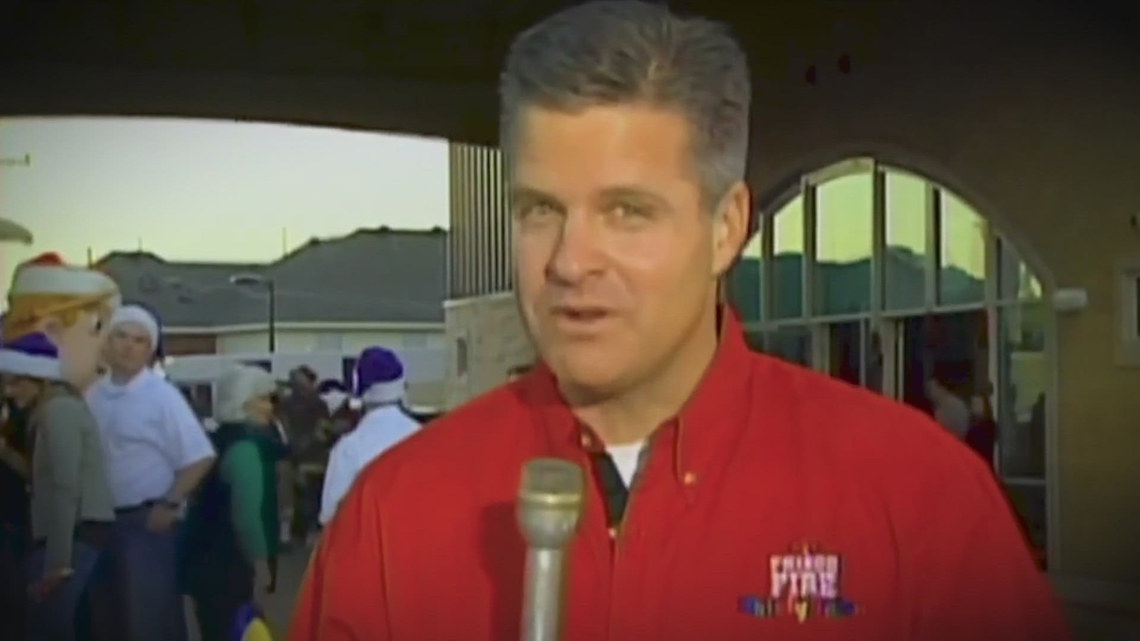
The Unrivaled Authority: Why North Texans Trust Pete Delkus
Living in North Texas is an experience marked by a few immutable truths: the relentless summer heat, the fierce loyalty to local cuisine, and the undeniable seismic shift in household anxiety when a Pete Delkus Twitter alert flashes across your screen. For nearly two decades, Pete Delkus has been more than just a meteorologist; he's been a steadfast sentinel, a calming voice amidst atmospheric chaos, and an essential part of the North Texas landscape. His presence alone on WFAA-TV signifies that weather, for better or worse, is about to make headlines.
As the Emmy award-winning Chief Meteorologist at WFAA in Dallas, TX, Pete Delkus has cultivated a reputation built on timely, accurate, and incredibly thorough forecasts. Since joining the station in June 2005, he has earned the profound respect of millions of North Texans. When severe weather threatens—be it the roar of a tornado, the damaging pelts of hail, or the silent creep of flash flooding—viewers instinctively turn to Delkus. His unwavering dedication and methodical approach to his work have not only made him a household name but have also garnered national recognition, including being named "Top Meteorologist in America" by Broadcasting & Cable trade magazine and accumulating an astonishing 19 Emmy Awards for his weather anchoring and special show hosting.
This deep-seated trust isn't accidental. It's the product of years of consistent, reliable information delivered with a gravitas that conveys the seriousness of the situation without inciting unnecessary panic. North Texans trust Pete Delkus not just because of his credentials, but because he has consistently proven himself to be the most dependable source of information when it matters most. He understands the unique, often volatile, weather patterns of the region, and he communicates them in a way that empowers communities to prepare and stay safe. It's this blend of expertise and clear communication that forms the foundation of his immense credibility, making his severe weather alerts, especially those disseminated via social media, a critical tool for preparedness.
Decoding the Delkus Twitter "Recipe": From Panic to Preparedness
For newcomers to North Texas, or even seasoned residents who haven't quite "cracked the code," a single tweet from Pete Delkus Twitter can indeed send a ripple of anxiety. I recall my own early days, seeing maps aflame with reds and oranges, accompanied by phrases like "capping inversion," and feeling that primal urge to find the safest place in the house. It took time, cross-referencing meteorological terms with his real-time updates, to realize that his tweets are not just data dumps; they are a carefully constructed narrative, a recipe designed to impart understanding and foster preparedness. The "secret ingredient" is understanding that he's illustrating the *potential* for a storm, not always a guaranteed certainty.
His job is to present the atmospheric "ingredients." Your job is to calmly interpret that information. Here's how to move from confusion to clarity, and from anxiety to actionable safety:
- First, Take a Deep Breath & Don't Panic: This might sound simple, but it's crucial. Before you even look at the map or read a word, center yourself. Pete Delkus is providing information for your safety, not trying to scare you. The sky may be threatening, but it's not falling without warning.
- Scan the Threat-o-Meter: Your Initial Glance: This visual summary is your first stop for a high-level understanding. Look at the bars. Is "Tornado" in the orange or red? Is "Hail" the most significant threat, or perhaps "Wind" or "Flooding"? This quickly gives you the predominant risks for the day without getting bogged down in intricate details.
- Read the Key Message in the Tweet's Text: Now, delve into his carefully chosen words. Delkus often provides a concise summary, covering the "who, what, where, and when" right here. Pay close attention to his confidence level, expressed through phrases such as "potential for," "threat is increasing," or "some storms may produce." This language is not arbitrary; it's a critical indicator of how likely and how severe he anticipates the event to be.
- Analyze the Timing & Location Map with Context: Don't just focus on the scary colors. This map is packed with vital information.
- Find Your County: Locate where you live or where your loved ones are.
- Note the Timeframe: A "Significant" threat from 7-10 PM is vital if you're planning evening activities, but less immediately urgent if you're looking at the map at 2 PM. Context is everything.
- Understand the Color Code: The colors universally follow a pattern indicating risk levels:
- Yellow: Marginal/Slight Risk (Isolated severe storms possible, limited intensity/coverage)
- Orange: Enhanced Risk (More numerous or widespread severe storms, greater intensity/coverage)
- Red: Moderate Risk (Widespread severe storms, potential for intense tornadoes, large hail, or destructive winds)
- Magenta/Purple: High Risk (A rare forecast, indicating a severe weather outbreak with the potential for long-track, violent tornadoes or widespread damaging winds)
Unpacking Meteorological Jargon in Pete Delkus's Alerts
To truly master the Pete Delkus Twitter forecast, it's essential to understand the "ingredients" he often references. These meteorological terms, while sounding complex, provide crucial insights into a storm's potential:
- Capping Inversion (or "The Cap"): This is a layer of warmer air aloft that acts like a lid, preventing storms from forming. While a strong cap can suppress storms, if it breaks, the rapidly rising air can lead to explosive, powerful thunderstorms. When Delkus mentions a strong cap, it means storms are less likely *for now*, but if they do erupt, watch out.
- PDS (Particularly Dangerous Situation): This is a very rare and serious tag, typically associated with Tornado Watches issued by the Storm Prediction Center. When Pete Delkus highlights a "PDS" watch, it indicates high confidence in the potential for long-track, strong (EF2+) tornadoes, often multiple ones, over a significant area. This requires immediate, heightened vigilance and preparedness.
- Dryline: Common in North Texas, this is a boundary separating moist air to the east from dry air to the west. As moist air is lifted over the dryline, it can trigger severe thunderstorms, especially in the spring. Understanding its position is key to knowing where storms might fire up.
- Shear: This refers to changes in wind speed and/or direction with height in the atmosphere. Strong wind shear is a critical ingredient for rotating thunderstorms (supercells) that can produce tornadoes. When Delkus talks about high shear, it means tornadic potential is elevated.
- CAPE (Convective Available Potential Energy): Essentially, this is the "fuel" for thunderstorms. High CAPE values indicate a very unstable atmosphere with a lot of energy available for storms to tap into, potentially leading to intense updrafts and severe weather.
- Dew Point: This measures the amount of moisture in the air. Higher dew points (above 60-65 degrees Fahrenheit) mean more moisture, which is crucial for fueling strong thunderstorms and creating heavier rainfall.
- Watch vs. Warning: A quick but vital distinction. A Watch (e.g., Tornado Watch, Severe Thunderstorm Watch) means conditions are *favorable* for severe weather to develop in or near your area. A Warning (e.g., Tornado Warning, Severe Thunderstorm Warning) means severe weather is *imminent or occurring* and immediate action is required.
Beyond the Tweet: Proactive Steps for North Texans
Understanding Pete Delkus Twitter alerts is just the first step. True preparedness means translating that knowledge into action. Here are practical steps every North Texan should take:
- Develop a Family Emergency Plan: Discuss where to go (safe room, shelter), what to do, and how to communicate if separated. Practice it regularly.
- Have Multiple Ways to Receive Alerts: While Pete Delkus's tweets are invaluable, don't rely on just one source. Invest in a NOAA Weather Radio, sign up for local emergency alerts, and have battery backups for your phone.
- Know Your Safe Place: In your home, identify the safest spot – typically an interior room on the lowest floor, away from windows. Practice getting there quickly.
- Prepare a "Go Bag": Assemble a kit with essentials like water, non-perishable food, a first-aid kit, medications, important documents, flashlights, and a whistle. Keep it accessible.
- Stay Informed Beyond Twitter: While Pete's tweets are a critical initial alert, always follow up with detailed information from WFAA.com, WFAA-TV broadcasts, and the National Weather Service. For further reading on mastering these forecasts, you might find Decode Pete Delkus's Tweets: Your Guide to North Texas Weather Clarity and Beyond the Red Map: Understanding Pete Delkus's North Texas Weather Forecasts incredibly helpful resources.
- Charge Devices & Keep Gas Tank Full: During storm season, keep phones, laptops, and power banks charged. If evacuation might be necessary, keep your car's fuel tank at least half full.
- Secure Outdoor Items: Bring in or tie down anything that could become a projectile in high winds (patio furniture, trash cans, toys).
For North Texans, Pete Delkus is more than just a weatherman; he's a trusted guide through the often-turbulent skies of the region. By understanding his severe weather alerts on Pete Delkus Twitter and beyond, you empower yourself and your family to move from a state of reactive anxiety to one of proactive preparedness. Learning to interpret his "recipe" for atmospheric conditions, translating the jargon, and taking actionable steps will ensure you're not just informed, but truly ready for whatever North Texas weather may bring.